.jpg) SINCE 1964 1035 E. Camelback Rd., Phoenix 800-733-1818 |
.jpg) Serving Phoenix with the Pride Go Go Elite Traveller 2 Platinum Electric 4 Wheel Scooter that turns like a GoGo 3-Wheel. A premium travel scooter focused on maneuverability, comfort, and convenience! Pride’s EZ Turn Technology delivers a tight 37" turning radius with 4‑wheel stability, ideal for indoor spaces. The Charge360 magnetic system simplifies charging your scooter. Features such as the angle‑adjustable tiller provides comfortable steering. The Elite Traveller 2 Platinum gives you ergonomic control, and feather‑touch disassembly making transport of your Go Go scooter so very easy. A mesh‑back seat, removable basket, and 300-pound capacity make it perfect for daily use and travel.GET A FREE QUOTE 800-733-1818 |
.jpg) LOCAL STORES
|
LOCAL STORES |
||
 .jpg) Phoenix Go Go SpecialistsGET A FREE QUOTE: 800-733-1818
1.
Go-Go Elite Traveller® 2 (4-Wheel)
2.
Go-Go® Carbon
3.
Go-Go® Endurance AL+
4.
Go-Go® Sport (4-Wheel)
5.
Go-Go Elite Traveller® 2 Platinum
6.
Go-Go® Ultra X (3-Wheel)
7.
Go-Go® Super Portable
8. Go-Go® LX with CTS Suspension
9.
Go-Go® Sport (3-Wheel)
10. Go-Go® Ultra X (4-Wheel) |
||
.jpg) |
||
.jpg) LOCAL STORES
|
||
FOLDING CARBON.jpg) LOCAL STORES
|
||
.jpg) .png) If you're in Phoenix, the Pride Jazzy Air 2 is a power wheelchair designed to enhance social interaction and accessibility through its signature elevating seat, which raises 12 inches in just 11 seconds. |
||
 Why you should buy a Pride Mobility Jazzy Carbon Folding Power Chair...
The Pride Jazzy Carbon line
offers an exceptional balance of strength and portability, utilizing an
ultralight carbon-fiber frame that makes transport effortless for active
users.
|
||
.jpg) .png) The Pride Mobility LX Sport is a high-performance 4-wheel scooter designed for users in Phoenix who prioritize a blend of rugged capability and sophisticated comfort. It stands out in the luxury class with its CTS (Comfort-Trac) Suspension, providing a smooth ride over varied outdoor terrain, and a top speed of up to 8 mph. The scooter is equipped with a full lighting package, including ultra-bright LED headlights and directional signals, ensuring visibility during evening excursions. With its large pneumatic tires, anatomical delta tiller, and a weight capacity of up to 400 lbs, the LX Sport offers a heavy-duty, stable platform that maintains a sleek, modern aesthetic suitable for both paved paths and light trails. |
||
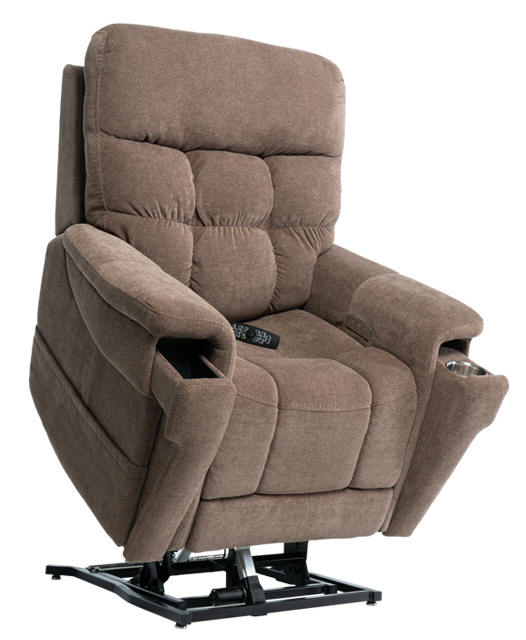 Serving Phoenix AZ with the VivaLift! Ultra (PLR-4955) Lift Chair Recliner | A premium power recliner from Pride Mobility designed to deliver for those in Phoenix a personalized, high-end relaxation experience through its advanced multi-zone adjustment system. It features a unique tilting pivot base that allows for a weightless, "True Zero Gravity" feel, effectively distributing pressure and enhancing circulation.LOCAL STORES LOCAL DELIVERY LOCAL SET-UP LOCAL SERVICE |
||
.jpg)
Serving Phoenix AZ with the Pride Mobility VivaLift!
Tranquil 2
(PLR-935) is a premium, true-infinite position lift
chair designed to provide tailored comfort through four independent
motors that control the backrest, footrest, power lumbar, and power
headrest. |
||
|
SINCE 1964 1035 E. Camelback Rd., Phoenix 800-733-1818Conpare Pride Mobility Price, Quality, Guarantee, Serving and Selection. At ElectroEase, we are Pride Mobility Specialists!Pride Mobility offers an extensive lineup
of mobility solutions in Phoenix, including the
VivaLift!
series of power recliners with models like the
Premier (PLR-5900),
Ultra (PLR-4955),
Radiance (PLR-3955),
Elegance 2 (PLR-975),
Metro 2 (PLR-925),
Tranquil 2 (PLR-935),
and
Urbana 2 (PLR-965),
alongside the
Evolution (LC-435)
and
Essential (LC-105)
collections.
|
||
| Phoenix | ||
.png)